The quick read
What to know
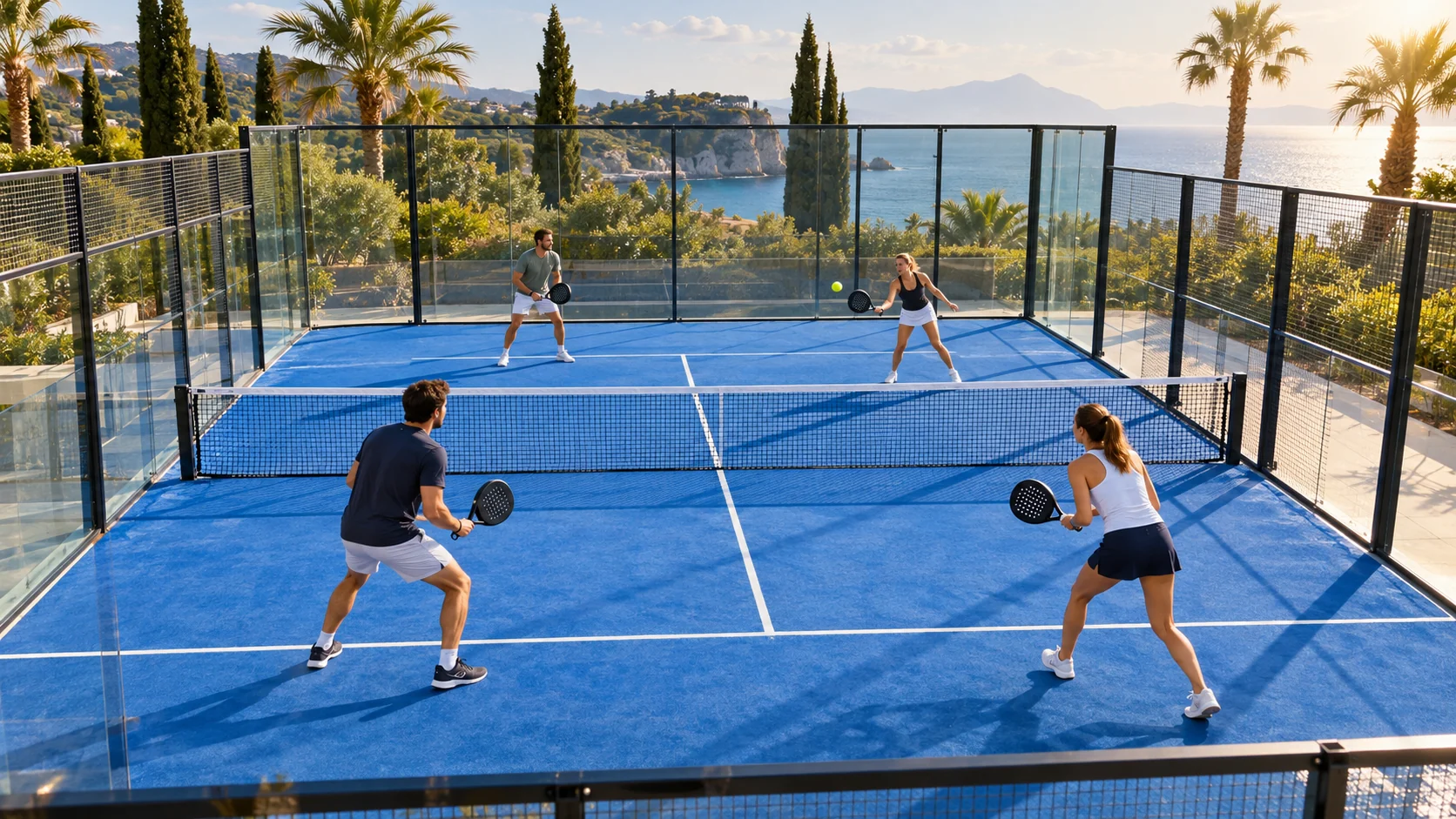
- Padel is normally played as doubles on an enclosed court.
- Points begin with an underarm serve; wall rebounds are part of the game.
- The sport began in Mexico in 1969, well before its recent international expansion.
- Before booking a holiday game, check court access, equipment, coaching and any separate charges.
A glass-sided court, four players and a rally that carries on after the ball hits the back wall: padel is easy to recognise once you know what you are watching. Its growing visibility can make it seem like a new invention, but the sport has been around for more than half a century.
Whether you want to try a lesson at home or make room for a game on holiday, here is a practical introduction.
What is padel?
Padel is a racket sport played across a net on a court measuring 20 metres long and 10 metres wide. The enclosure, usually a combination of glass or solid walls and metal fencing, is part of play.
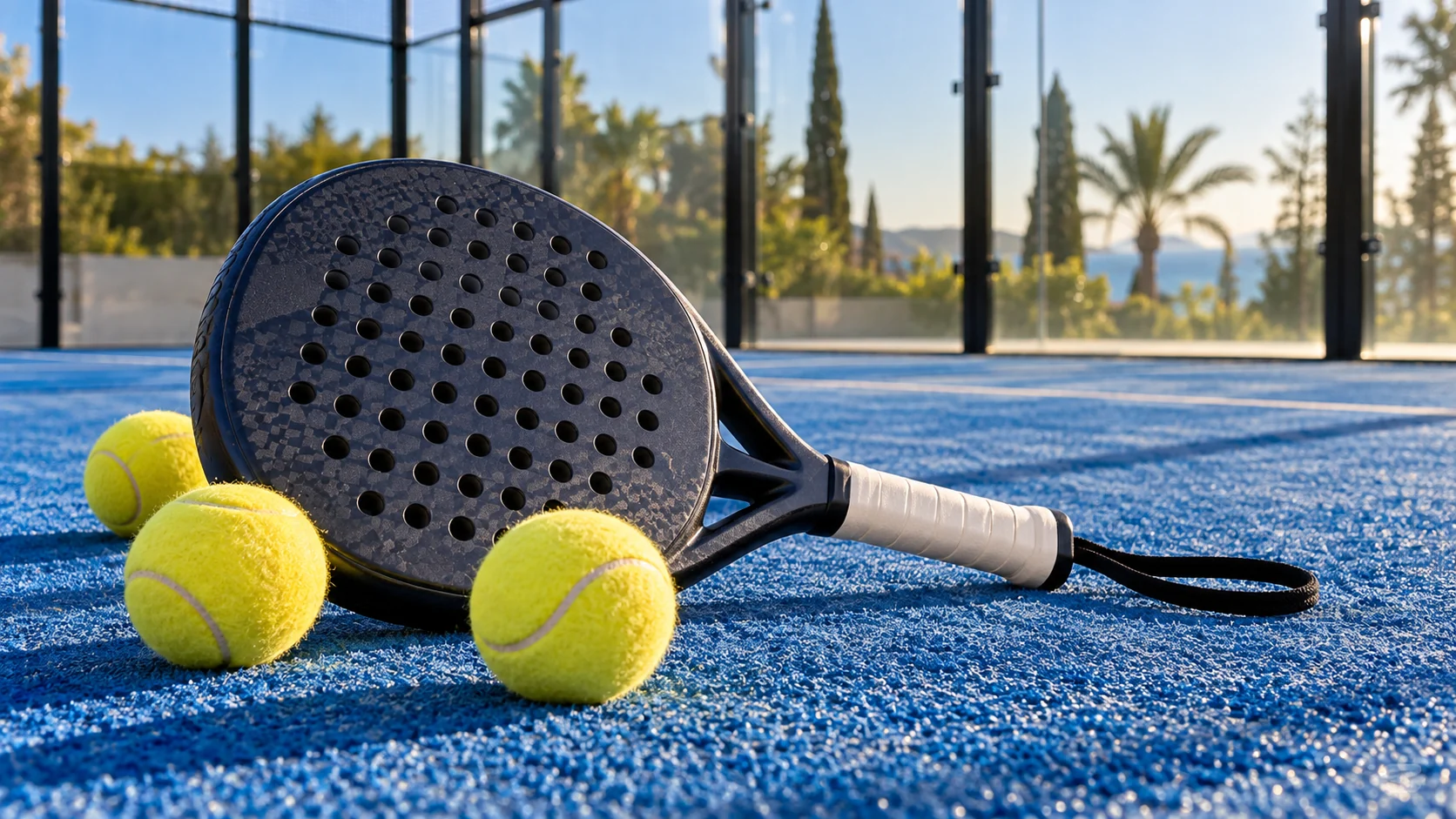
Players use compact, perforated rackets without strings and a pressurised ball that resembles a tennis ball. The usual format is two players against two. Think of tennis-style scoring with an extra tactical element: a ball that reaches the glass is not necessarily a lost point.
Where did padel come from?
According to the International Padel Federation, Enrique Corcuera created padel at his home in Acapulco, Mexico, in 1969. With insufficient space for a full tennis court, he built a smaller enclosed playing area.
The sport reached Spain in the early 1970s, when Alfonso de Hohenlohe introduced courts at the Marbella Club Hotel. It also spread to Argentina, which became another important centre of the game. FIP was founded in 1991, and the first World Padel Championships followed in Spain in 1992.
Today’s new audience is discovering a game with decades of development behind it.
Why has padel become so popular?
The expansion is measurable. In its October 2026 World Padel Report, FIP reported more than 40 million players worldwide and over 91,200 courts. These are the federation’s reported figures, rather than a claim that every country is experiencing the same growth.
Several features help explain the appeal:
A manageable first session. An underarm serve and a compact racket can make the opening steps less intimidating for a beginner. You do not need to master a tennis-style overhead serve before starting a rally.
A social format. Doubles puts four people into the same game. For friends or a holiday group, the shared session can be as important as the score.
Plenty to learn after the basics. Getting started and playing well are different things. Reading rebounds, choosing a lob and moving with a partner give the game depth as players improve.
These are practical explanations for its appeal, not proof of a single cause behind the worldwide growth. The LTA similarly highlights accessibility and the social side when discussing padel’s popularity.
Start with the serve
Stand behind the service line, bounce the ball and strike it underarm at or below waist height. Send it diagonally into the opposite service box. You have a second attempt if the first serve is a fault, and the receiver must let the serve bounce before returning it.
Keep the rally alive
After the return of serve, you can volley or play after a bounce. Return the ball before its second bounce on the floor.
The key distinction is the order of contact. A shot that crosses the net and hits the opponents’ glass or fence before landing on their court is out. If it lands first, the rebound can remain playable. A serve that lands correctly but then hits the metal fence before its second bounce is a fault, unlike one that rebounds from the glass.
Understand the score
Points use the familiar sequence of love, 15, 30 and 40. Under the standard advantage format, a pair needs two consecutive points from deuce to win the game. A set is normally six games with a two-game margin, with a tie-break at 6–6, and matches are usually best of three sets.
Formats can vary. FIP’s 2026 rules also include Star Point and Golden Point options, so agree the format before starting rather than assuming every match uses unlimited advantages.
What should you check before your first game?
A beginner lesson is a useful way to learn positioning and the glass rebounds. Tell the coach if everyone is new, rather than joining a session intended for experienced players.
Before reserving a court, ask:
- Is the price per court, per person or part of a coached session?
- Are rackets and balls included, and which shoes does the venue require?
- Can the venue arrange partners if you do not have four players?
- Is the court indoors or outdoors, and what happens if weather prevents play?
- How long is the booking, and what are the cancellation conditions?
Use the racket’s wrist strap while playing; FIP’s rules make it compulsory.
Adding padel to a Belek holiday
For a golf group, a padel session could be a separate activity between rounds. Leave enough time for transfers, a lesson and a break rather than squeezing it into an already full playing day.
Check the arrangements for your exact hotel and travel dates. An all-inclusive stay does not automatically mean that court hire, coaching, equipment or floodlighting is included.
Explore our published padel packages for hotel stays with stated padel rounds. Prices are for the specified package and room arrangement; court duration, allocation and playing times remain subject to supplier confirmation. Court hire or a lesson on its own needs its own quote.
A few more answers
Common questions
Is padel the same as pickleball or paddle tennis?
No. Padel uses an enclosed court, a perforated racket and a pressurised rubber ball. Pickleball uses an open court and a hollow plastic ball, with different rules. Paddle tennis is also a different game, typically played on an open court without padel’s rebound walls. “Padel” is the name to look for when booking this sport.
Do I need tennis experience?
No. Tennis experience may feel familiar, but beginners can start with an introductory padel session. The walls, positioning and serve still need explaining.
Is a padel game included in a golf package?
Only if the package explicitly says so. Check the court booking, coaching, equipment and payment arrangements separately before making plans around a game.
Sources & further reading
- International Padel Federation: historypadelfip.com (opens in a new tab)
- FIP Rules of Padel, applicable from 1 January 2026padelfip.com (opens in a new tab)
- FIP World Padel Report 2026 announcement, 14 October 2026padelfip.com (opens in a new tab)
- LTA Padel: rulesltapadel.org.uk (opens in a new tab)
- LTA Padel: why padel is popularltapadel.org.uk (opens in a new tab)
- LTA Padel: padel vs pickleballltapadel.org.uk (opens in a new tab)
- LTA: padel vs tennislta.org.uk (opens in a new tab)
- LTA Padel: history and paddle-tennis distinctionltapadel.org.uk (opens in a new tab)